Sometimes just saving some money isn’t enough, and you really need to bare down and save more money for big goals or expenses. These five unconventional tips can help push you through for bigger savings.
Sometimes making small changes to save a little extra money each month is helpful for meeting small goals, but occasionally, saving a little isn’t sufficient.
There can be times when you need to save more money for large goals or for substantial upcoming purchases.
These 5 tips are designed to make a significant difference in the amount you can save each month.
This post is all about how to save more money and five unconventional tips for doing it in a big way.
Stop Eating Out
This first tip for how to save more money can be a bit painful. As someone who loves to eat out and hates cooking, eating at home every night can seem daunting.
However, if you track your out to eat spending each month, between coffee trips, lunch and dinners, you could be looking at spending close to $1000 or more a month.
Just to put this spending into perspective, instead of a $5.00 coffee at Starbucks, a cup of coffee at home averages about $.16. Instead of a steak dinner at an average priced steakhouse for $21.00 or more, a steak dinner at home averages around $12.00.
Eliminating these meals can lead to substantial savings each month, and an enormous amount of savings over the course of a year.
Besides just traditionally cooking at home each night, here are some cost effective alternatives that I like to use:
Trade cooking nights with friends or family.
This is one of my favorite ways to switch up eating at home. One night a week, you cook dinner for a friend or family member. Then a different night of the week, have them cook for you both.
We are a family of 4, but we often do this with my parents or my grown daughter and her family.
This is a great way to not only free up a night of cooking, but you also get the added benefit of spending time with someone you care about.
Use a meal prep service
This method may not save you any grocery money, as most meal prep services cost the same or a little more than doing your own grocery shopping, but it’s still typically cheaper than going out to eat.
By having your meal items delivered to you, you eliminate the need to go to the grocery store, which can also cut out impulse purchases. It’s very easy, as almost everything you need for a complete meal is already at your fingertips come dinner time.
Meal prep your lunches on the weekend
One of the best ways to avoid eating out at lunchtime is to bring your lunch to work. The hard part is either remembering to do it the night before or having to get up early to prepare it in the morning.
A great solution to this is to do one meal prep on Sunday for the whole week.
There are many great resources out there for meal prep, but the one I’m trying right now is The Meal Prep King cookbook. You can find it here on Amazon.
Create a crock-pot menu
If you’re like me, cooking every night can seem like an overwhelming task, but you can break up the number of days that you have to spend over the stove by periodically making crock-pot meals.
I like these simple and no hassle meals for three reasons:
You can prepare multiple crock-pot meals for the month at one time and put them in the freezer until you’re ready for them.
You can toss most recipes into your crock-pot in the morning before work and when you return, it’s all ready to eat.
Leftovers… even when I’m feeding my family of 4, most crock-pot meals make enough for leftovers.
Doing a no spend month can be a great way to really save more money. From the name of of it, you might think that you can’t spend any money during the month, which would be impossible, but that is not the case.
Successfully participating in a no spend month does have some loose rules to follow, though. The goal is to stop spending on everything except for your essentials, like food and housing.
The type of expense that you want to eliminate would be your discretionary spending, like on clothes, home decor and other “wants.”
Many people who do this challenge use up food that has been sitting in their refrigerator and pantry before buying more and create lists of fun and unique things to do at home during the month.
This way to save more money is one that many people believe isn’t even possible. Many people live with the belief that you’ll always have a car payment. This simply isn’t true.
The average monthly car payment in the US is a whopping $568 a month. Even if your car payment isn’t that much, imagine what you could do with that money over the course of a year. It would really add up.
Five years ago, I chose this path and sold my 5 month old Chrysler Town and Country to a dealer for a $3000 loss and found a used car to drive for less around $3000.
Without my $540 van payment and other money that I made selling things around the house, cutting my grocery bill and out to eat spending, I was able to pay off all $6000 in two months. I then had $540 more per month to use for other goals.
Since this time, we’ve only paid for cars in cash, and we save all of our money that we used to pay on car payments. All totaled, we save $785 per month that we used to spend on car payments. Multiply that by 5 years, and that is significant savings.
My suggestion is to ditch your car payment as soon as possible and drive something you can pay for in cash. Doing this will make your ability to save more money right within grasp.
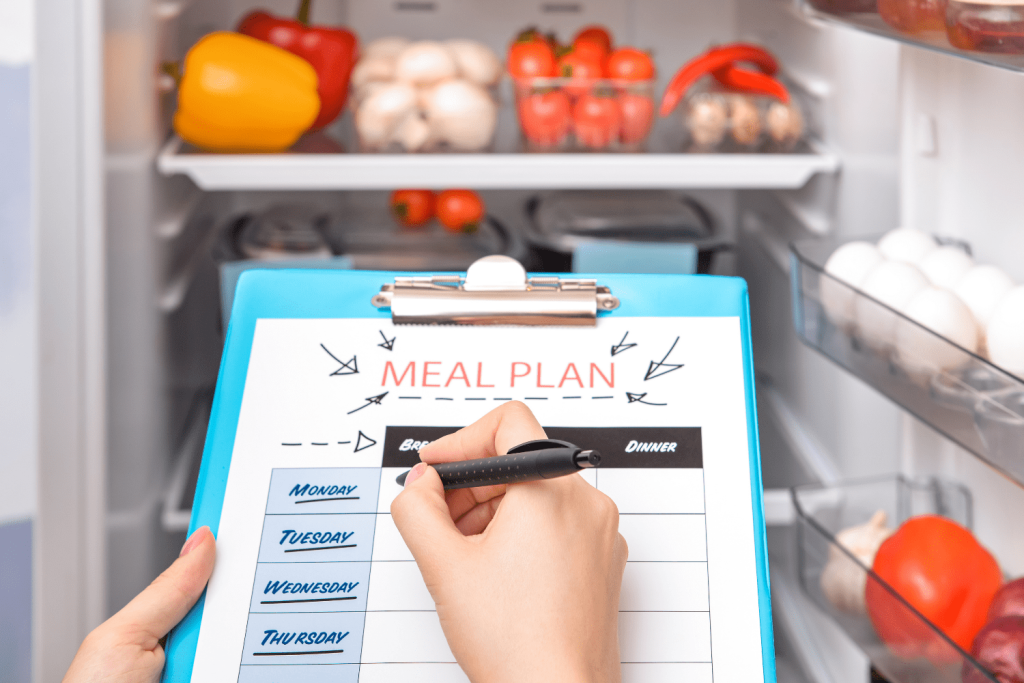
Cutting your grocery bill can seem like a daunting way to save money, but many times we have more food stored in our refrigerator and pantry than we use in a month. You can leverage this extra food for saving on your grocery spending.
Two other ways you can easily save more money on your grocery bill is to always plan before shopping and by using an online ordering feature.
By creating a plan before you go shopping, you can eliminate purchasing items that you already have at home. You can also remove the need to return to the store for items you forgot.
Another benefit of creating a shopping plan is that you already know what you’re going to cook, and you don’t buy extra items that run up your bill.
If you utilize an online ordering feature at the grocery store, you can also eliminate impulse purchases. One of the easiest ways to drive up your grocery bill is to spend on random things that don’t match your plan.
I’ve also found a great perk to the online ordering is the ability to see exactly how much you’re spending before you pay.
Almost every week when I do my grocery shopping, I end up removing unnecessary items from my cart to make sure I’m making the best choices.
You can try out one of these suggestions right away and see how it can help you to save more money.
Live Debt Free
Now, this way to save more money is not possible overnight. It could take months or a couple of years to clear your debt, but eliminating all debt allows you to save more money than you ever could with other suggestions.
By eliminating debt, you have the opportunity to use all of your monthly income to reach your goals.
According to one source, the average house payment in the United States hovers between $1275 and $1751 a month. What would you do with an extra $1200 to $1700 a month?
“What would you do if you had no payments? Anything you want.”
-Dave ramsey
Of all of the potential ways to save more money, ultimately paying off debt could by far make the most impact in your ability to save. While becoming debt free requires a lot of sacrifice and self-control, I promise you that it is 100% worth it.
I recommend following Dave Ramsey’s Babysteps for getting out of debt. They include:
Fully fund your emergency fund with 3-6 months of expenses
Invest 15% of your income
Fund children’s college
Payoff mortgage
Live and Give like no one else!
If you’re looking for a detailed step-by-step plan to get out of debt, I highly recommend the program that I used to payoff over $107,000, Financial Peace University.
I hope you’ve learned ways to save more money with these five unconventional tips.
Do you have other ways that you’ve used to save more money in your life? Please share them in a comment below.
Saving money can be difficult with so many people and things all wanting a piece of your hard earned money. Try out some of these simple ways to save money to keep your money for more travel, more giving, paying off debt, or retiring early!
You may have been struggling to find ways to save money and wondered how it could even be possible with your income. I have totally been there and have found several ways to make small changes for a large impact with money.
You’ll see how there are many different ways to make small changes, so that you can go from being a spender to being a saver.
After learning these simple to implement strategies, you’ll be ready to save money like a pro for whatever your money goals might be.
This post is all about eleven simple ways to save money and get started today.
1. Always Go Shopping With a Plan
Whether you’re going shopping for groceries, clothes, gifts, or any other purchase, do not leave your home without a plan. Impulse shopping is one of the biggest ways to overspend on shopping trips.
It’s hard to curb spending if you are like me and really enjoy a fun day out shopping, but in order to avoid impulse spending, I’ve found that it’s best to follow a few quick steps before leaving to go on any shopping excursion.
Brainstorm a list of items that you are planning to purchase and write them down.
Do your research before you leave to find out which brand is the best value and places where you can purchase.
If you are purchasing for yourself, check your home to make sure you aren’t purchasing duplicates. This could mean checking your closet or your pantry, depending on what you’re shopping for.
Have a set amount of money allocated to spend before you leave and don’t go over that amount.
These are some great ways to be sure that you stay on track with your spending while still enjoying a shopping trip. Another great way to save money is to use the 24 hour rule.
2. Use the 24 Hour Rule
The 24 hour rule is one that I was introduced to a few years ago when my husband thought we needed a new TV in the living room, while we were standing in the electronics store.
He thought we needed it right then, and I thought we didn’t need one at all. Someone mentioned to me about using the 24 hour rule, especially when making large purchases. Honestly, I’ve found that it works great with all size purchases.
The 24 hour rule just says that when you think you really want something, take 24 hours to think about it before making a decision. You must leave the store or turn off the computer (if shopping online) and after 24 hours decide if it is really something that you want to spend that money on.
This has curbed quite a bit of frivolous spending at our house, and allowed time to decide if that purchase was really on our priority list.
3. Measure Your Wants vs Your Needs
Of all of the ways to save money, this one can seem obvious, but can actually be one of the trickiest parts of saving money… measuring your wants versus your needs.
Sometimes in life, it can be difficult to determine if something is a want or a need. Also, are we only supposed to buy needs and never buy wants?
Attempting to cut out all wants and only purchase “need” items is a sure way to end up failing at saving money.
Don’t get me wrong, I believe that curbing spending is a good thing, as we are constantly being encouraged to spend, spend, spend; however, too much restriction on wants could only lead to a mental backlash, and could lead to out of control spending.
I recommend you first make sure that your needs are met each month, then make allowances for a certain amount of money to be allocated to wants. I like to call this “fun money.” Fun money is yours to spend how you like, but once that money is gone, then I like to say the fun is over for that month.
The money that is not allocated to needs or wants is your savings. I highly encourage you to save more than you spend on fun money each month.
Of all of the ways to save money, this is the one that has the potential to have the biggest impact on your life. Did you know that 8 out of 10 people live paycheck to paycheck?
Most people don’t know how much they owe to creditors or how much available money they have each month after paying their bills. I know, because I was that person just a few short years ago.
Creating a budget every month before the month starts is the most effective way to save money. I know that budgets get a lot of bad press.
However, a budget is simply what you make it. You can hate it and it will never help you meet your goals, or you can use it as a tool to take control. I prefer the second option.
Having a budget truly gives you permission to spend. You get to decide where all of your money is going, and how it will be allocated for the month. Then once you have the plan, all you have to do is execute it.
Need a new outfit? Put it in the budget, and go buy whatever you want for that amount. Need a better vehicle? Put it in the budget, and in a few months, you’ll have enough for it. Want to retire early? Decide how much you can budget each month to save in order to reach your goal.
Using cash envelopes can be one of the most fun ways to save. Follow these steps to begin using cash envelopes:
After completing your monthly budget, decide on certain categories that will be only paid for in cash.
Total up the amount that you’ll be spending in cash.
Withdraw that amount from your account
Place it in envelopes that are labeled for each category
Throughout the month, only spend on those categories out of the cash envelope
When the envelope is empty, you’re done spending in that category.
Out of all of the ways to save money on this list, this is probably one of the oldest. This is how my grandmother made sure not to spend too much each month, and my mother used this trick when I was just a baby.
Paying with cash has proven to be one of the best ways to save and ensure you spend less, because there is actually some pain associated with spending cash. When you spend on a credit or debit card, you don’t see the money disappear; however, with cash, you tend to get more attached to it and less likely to want to part with it.
Try out this favorite of my ways to save this month. I promise it will make a positive difference in your spending.
6. Calculate Purchases by Hours Worked
This was a real game changer for me when I started getting control of my money. When I started to get out of debt, I began selling items that were no longer used around my house. I quickly found that those items did not sell for anywhere near what I paid for them.
It suddenly hit me that all of that money that I was losing was hours of my life. I just worked 6 hours for those shoes that I hardly wore and just sold to someone else for $5.
Before you make a purchase, I’d encourage you to calculate the cost of time for that item. If you buy that tv in exchange for 134 hours of work… 134 hours away from your family… is it worth it? In some cases, it will seem totally justified, and in other cases, it will seem ridiculous.
This is a great way to not only save money, but also to really prioritize those things that are important to you.
7. Use Online Grocery Ordering
Have you used online grocery ordering in the last year? Statistics show that delivery service for groceries has increased dramatically in the last year and a half.
While it has been very helpful when you have sick family members, it is also one of the great ways to save money.
One of the main ways that we overspend at the grocery store is through impulse purchases. You can almost eliminate those last minute expenses by putting your grocery order online.
Ordering your groceries online also allows you to see exactly how much you’re spending as you add items to your cart. Of course, you can take a calculator with you to the store, but I have found this is difficult to do without accidentally clearing your total at least once.
Almost every week, I put a grocery order online and before I hit the checkout button, I remove some items. Looking at that total can certainly make you think twice about some of those items.
Another benefit to ordering online, is that you can look at a recipe while you’re ordering, which can eliminate extra trips to the store when you forget something. On the flip side, you can also check your pantry and refrigerator while you put in the order, so you don’t over order.
Online grocery shopping is a win-win for ways to save money.
8. Make a Plan For Eating Out
If you’re anything like me, you might spend the majority of your discretionary money on food, specifically eating out. It seems like every week, there are a few days that I’m fighting the urge to just go pick something up. Trust me, this can make a huge dent in your ability to save money.
A few years ago, we made a plan to only eat out two times a week. This may still seem like a lot to some people, but it was a huge and necessary cut back for us.
We made a plan to get something quick, like subs or soups for lunch on Saturdays. We like to sleep in on Saturdays, and this enabled us to do that and not worry about lunch.
On Sundays, after church, we would take our family out for a nice meal, often with my parents or other church members.
This gave us something to look forward to for the week, and it also kept us motivated to cook during the week. It also made it pretty easy to plan how much we were going to spend on eating out each week.
While we didn’t know where we would choose to eat on those two days, we did know that the Saturday lunch was going to be about $35 on the top end for our family of 4. We knew our Sunday lunch would be closer to $60 including a 15% tip.
By having a plan, it can help you stay on track with your savings, while still enjoying a meal out.
9. Skip Cable
I actually have been slow to come around to this way to save money. I’ll be honest, I like to watch tv or just have the tv running in the background while I work. You may be like me, and like to watch several different types of shows on different channels. It’s difficult to get this variety without cable.
However, cable is a huge money suck.
A few ways to save money once you ditch the cable, you can opt for streaming services, free offers and using an antenna.
Streaming Services
Using a streaming service is an affordable way to watch your favorite shows and movies or discover new ones. For a small portion of the cost of cable, you can watch tv on demand of almost any genre.
It seems like there is a new streaming service coming out every day, so you should take advantage of free trials. Most streaming services offer a free trial, where you can test it to see if you like the shows that they have available.
I recommend only testing one free trial at a time. This way you can fully look at their catalog and how their service works to see if it is a fit for you.
In many instances, these services are so inexpensive, you could sign up for 2 or 3 of them and still save hundreds of dollars more than with cable.
Free Offers
Many streaming services are now offered free with other services. For instance, as of the writing of this article, we get Discovery+, Hulu and Disney+ free with our cell service. Previously, we got Netflix free with a different provider.
Check with your cell providers or other services to see if they offer free streaming as part of your plan. In addition to free shipping, you also receive free streaming with a subscription to Amazon Prime.
Antenna
Depending on where you live, you may be able to get most of your favorite shows and movies through an antenna. Antennas work great if you are near a city, but don’t work very well if you are out in the country away from a signal.
If you have a house, an antenna that can be mounted in your attic is a great option. We have one of these in our attic, and we get all of the local stations clearly.
If you don’t have an attic or the ability to place one there, you can try an antenna that sits on your tv, like this bestseller from Amazon.
10. Utilize Your Local Library
This is probably the best alternative to cable of all for ways to save money, and that is to use your local library for movie rentals. Most local libraries boast a large movie library, and as long as you return them on time, you can watch them all for free.
Here are some of the perks of using your library as one of your ways to save:
Interlibrary loan– This is where you can request a video from another library that your library doesn’t have.
Check out for multiple days– with most rental services, you only get the movie for 24 or 48 hours, but with the library, you typically get a week or more to watch the movie.
New titles– Libraries often have quite a variety of genres of movies. Often, you can find a movie that you never would have normally known about.
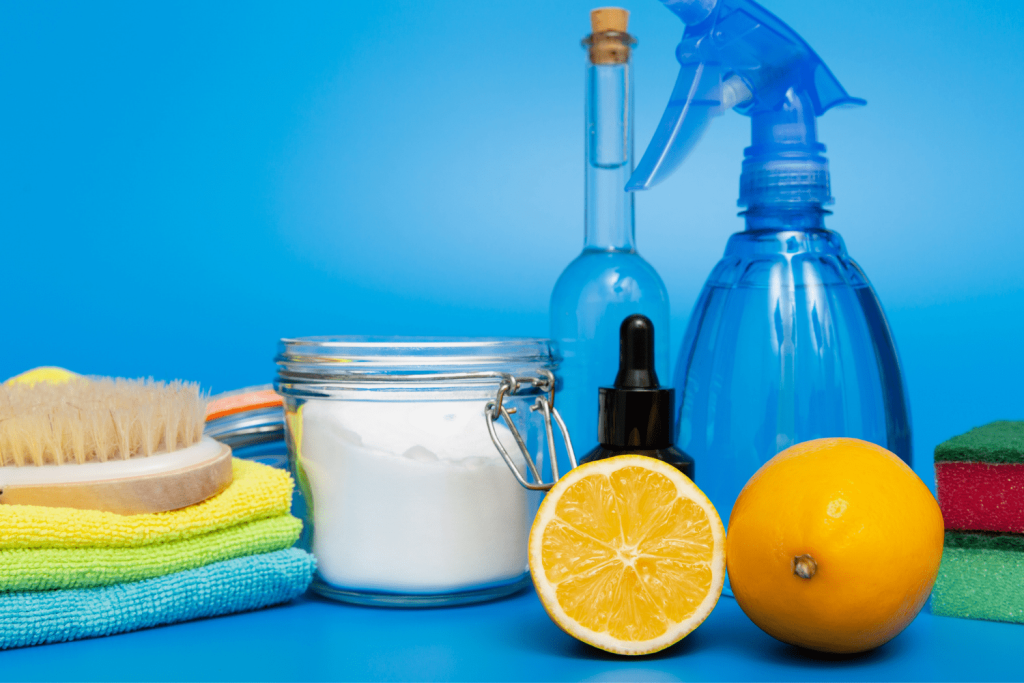
You may be unaware that there are several items around your house that are completely non-toxic and are every bit as good at cleaning your home as expensive and toxic chemicals.
Vinegar, baking soda, lemon and hot soapy water can clean almost anything around your home safer and at a fraction of the cost of those store-bought cleaners.
There is no research that using these items can kill viruses around your home, such as COVID-19 or flu, but they are very good at sanitizing a food prep station and basic kitchen and bathroom cleaning.
In my home, I use straight white vinegar to clean my kitchen and bathroom countertops, as well as mirrors and windows. Vinegar and baking soda is great for cleaning grout and stuck on messes.
For shower doors and bathtubs, try white vinegar with a little bit of dawn dish soap. Let it sit for about 10 minutes, then scrub with a sponge before wiping off.
Did you know that showing gratitude can be one of the easiest ways to improve your overall health? These five health benefits of gratitude can have a huge impact on your well-being, and one of the best parts is that you can get started right away!
You may have heard about the trend of keeping a gratitude journal and wondered if keeping one would give you any benefit. As you’ll see, there are many health benefits of gratitude, and using a journal can be one great way to start a journey to being more thankful.
Maybe you’re like me and feel like you’re already a grateful person, but have never bothered to write down the things you’re thankful for.
You’ll see how regularly writing down the things you are grateful for each day and expressing gratitude to others can actually improve your health.
After learning these amazing benefits, you’ll be ready to jump in feet first on your gratitude journey.
This post is all about the five life changing health benefits of gratitude and how you can get started today.
1. Experience Less Fatigue
One big health issue that Americans cite as a problem in their everyday lives is feeling fatigued. This can be a big problem for accomplishing tasks throughout the day. Feeling more alert is certainly a goal to accomplish.
According to this study from 2015, researchers found that patients with asymptomatic heart failure who practice spirituality and gratitude reported less fatigue.
This is great news, as being less fatigued can have a direct impact on our success at work and with our families.
2. Better Mental Health
With the rise in reports of mental health concerns since the beginning of the pandemic, seeking a way to improve our mental health has become almost necessary for everyone.
One of the great health benefits of gratitude is an overall more positive outlook and having a lower instance of depressed mood.
Studies have shown that practicing gratitude leads to a more positive mindset, which has shown to lessen depressive moods in subjects.
As we all look for ways to avoid getting sick, boosting our immune systems can offer us many benefits. Adding gratitude to an eating healthy regimen, and getting plenty of sleep, you could potentially increase your immune system response.
I’ve tried adding one to two expressions of gratitude daily to test these effects myself.
4. Improved Sleep
If you’re like me, you might have all the thoughts of everything you forgot to do or how things could go wrong come to your mind right as you lay down to go to sleep. Then dozing off becomes almost impossible.
The age old suggestion was to count sheep, but I suggest that instead of counting sheep, you might try counting blessings.
Try naming off things that you are thankful for, either out loud or in your head. This little trick can help to get your mind off of the negative thoughts (that you can’t do anything about at that moment anyway) and busy with more positive thoughts.
In this 2009 gratitude and sleep study, it was found that gratitude improved both the quality of sleep as well as the amount of sleep of the subjects.
5. Cope with Stress
As we live in a more and more overwhelming world, with work and home life always demanding more, finding ways to lower stress levels is becoming so important.
The great news is that we can quickly banish stress with a simple expression of gratitude.
This study from 2007, found that subjects were able to better cope with stressful situations when they regularly practiced gratitude.
When life is becoming overwhelming, try one of the suggestions below to help lower your stress levels and improve your overall health.
How to Get Started with Expressing Gratitude Today
There are many ways to practice gratitude and begin to experience all of the positive benefits outlined above in your own life.
You can either express your gratitude to others and spread joy, or you can practice gratitude in a more private way. Choose one or two suggestions below to get started today. No prescription needed!
Ways to Express Gratitude and Brighten Someone Else’s Day
Send a thank you note – This could be a paper thank you note or simply an email of thanks.
Tell someone one thing that you appreciate about them
Write down three things you’re grateful for each day on a calendar or planner page
Say a prayer and thank the Lord for three things you’re grateful for
Use glass markers to write three to five things on your mirror as you get ready in the morning
I hope this helps you see the health benefits of gratitude and ways you can get started right away.
Have you had a personal experience with the health benefits of gratitude, and you’d like to contribute your experiences with us? I’d love it if you’d contribute to this list in a comment below.
Today’s world is moving faster and faster, and everyone’s stress levels are rising. Try implementing these 8 simple living ideas to help slow the pace and live a more stress free life.
It seems like at every turn, we’re being increasingly bombarded with ways to improve our life. Hustle and grind are the mantra of many today.
Our work screams out for more and the news demands our attention.
Wouldn’t it be great to just tune out, back up, and get back to a simpler life? Try a few of these simple living ideas and escape from the constant call for more from you.
This post is about simple living ideasand escaping an overwhelming world.
1. Embrace the Less is More Mindset
In this often overstimulating world that we live in, we are constantly being told we need more. Buy more, decorate more, eat more… all so businesses can sell you more.
Often, though, all of that “more” ends up as clutter around the house, debt on a credit card, less money in the bank, and more daily stress.
You don’t have to become a minimalist to embrace having less around your house. One good rule of thumb is for everything to have a place. If you have items lying around that don’t have a place, let them go.
If these random items are necessary, then clean out a place for them and let the items that were in that place go.
Another good tip for having less around the house is to use a rule that realtors often suggest when getting ready to sell your home: eliminate 1/3 of your things. This tip can help to not only get rid of those piles of clutter, but also to identify what items are really important to you.
In order to spend less, I highly recommend the 24 hour rule on purchases. When you see something you want, wait 24 hours and see if you still want it before purchasing.
These quick simple living ideas are a few easy ways to ease into embracing a less is more mindset.
2. Banish the Negative
It is easy to fall into a routine of negativity and tension with so many opportunities to surround yourself with negativity, even in the realm of entertainment.
Many of the best selling books, tv shows and movies are centered around crime, intense drama and suspense. Like me, you may find yourself tensing your body and then replaying those negative scenarios in your head.
Even though I loved those crime novels and forensic shows on tv, I had to stop diving into them every night.
I’ve found that the more I eliminated these optional anxieties and stress, the more relaxed I felt. This simple living idea has definitely made a huge impact on my level of inner peace.
Likewise, if there are things in your home or work that cause you stress daily, make it a point to change that space or environment to make it more peaceful. You can eliminate clutter around your desk or workspace or wear headphones to eliminate negative chatter.
By eliminating those negative things you might unconsciously be choosing, you can free up your mind, body and thoughts for clear, positive thoughts.
Often, we feel so rushed to accomplish everything in the short amount of time that we have in a day; however, it is important that we take time to do something that we love doing.
Perhaps you like to cross-stitch, do DIY projects or play a sport. Regardless of what it is, we usually leave those tasks for any “extra” time that we have in a week. Well, here’s a news flash, there is never “extra” time.
You will have the same number of hours this week that you had last week and you’ll have the same next week.
Here are some great ways to make space for doing something you love:
Eliminate or reduce time on social media
Block off the time by actually writing it on your calendar
Prepare a crock-pot meal to freeze while cooking normal meal to free up your cooking time on a different day
Do your grocery shopping online (This can easily save at least an hour a week, especially if you add items to your online cart each day.)
4. Declutter Your Space
I’m not sure what space you might need to declutter. It might be your car, your office, your desk, your closet, or your whole home. I can tell you one thing, though, looking at a pile of things that need to be put away can stress…you…out.
That pile of receipts in your car, the pile of mail on the table, or the stack of random items in the corner… these are all signs that decluttering might be a great idea. You can also eliminate that constant feeling that you always have something to do.
Decluttering can seem like an overwhelming task when thinking of all of the spaces in your home. A great way to start is to pick a small space or a space that generally doesn’t have a lot in it, like your car or living room.
Clear just one space and enjoy it for a few days. This can help keep you motivated to another space without making you feel overwhelmed.
Of all the simple living ideas, this one has probably made the most impact on lowering my stress levels and improving my ability to stay positive.
I used to suffer from great deals of anxiety. One of the ways that I was able to take the teeth out of that anxiety when it would arise was to go for a walk. I found that the more I was outside, the less anxious I felt.
There is a lot of research about how being in nature can help to relieve stress.
Strive to go for a walk or get outside for a little bit each day. Leave your phone off, including music, while you walk and focus on the trees, sky and any greenery around you.
This is also a great time to think about things you’re thankful for and focus on positive thoughts for the day or evening.
6. Spend Less on Stuff
As mentioned before, having less brings great benefits, and one benefit that goes hand in hand with that is spending less.
By spending less, you open up so many opportunities that you may never be able to accomplish without the funding. Through spending less, you could save up the money you aren’t spending and make an impact on your life and others.
Some ways to transform yours :
Retire early
Travel more
Quit a job you hate and change careers
Start your own business
Give more
To make an intentional change in your spending, I highly recommend putting together a monthly budget. You can read about some of the reasons why budgeting is important in my post, The Importance of Budgeting and 7 Surprising Benefits.
7. Simplify Your Wardrobe
Do you ever go to your closet and realize that you have nothing to wear, even though your closet is actually packed with clothes? I have totally been there.
If you’re in this situation, I have one suggestion for you, which I just did myself….get rid of almost all of it.
This could be a quick process or a slow process, depending on how much you can allot to purchasing new items.
These are the steps I took to minimize my closet that I highly recommend:
Remove every piece of clothing from your closet.
Sort them into 4 piles:
I love to wear this (Keep)
I don’t love this, but it is in excellent condition or is a top brand (Sell)
I don’t love this, but it’s still in good condition (Donate)
I don’t love this, but and it has holes, rips, etc (Throw Away)
Do what needs to be done with the clothes based on your sorting.
Make a list of what items you really need for work and what you like to wear around the house. Check out this article on capsule wardrobes for some tips.
Go shopping with a set budget for your spending.
Purchase only the items on your list, and only choose items that you love and are of good quality. (The goal is to find items that you will want to wear for a long time, so they will need to last for a long time.)
This process might take a few months for you to work up to having all of the items that you need, but when you are finished, it’s recommended by most that you have no more than 40 items in your closet.
8. Actively Practice Gratitude
One of the key ingredients to simple living is having a peaceful spirit. Eliminating negative reactions to situations, jumping into panic mode, and always thinking of the worst case scenarios can keep you from feeling that needed peace.
An excellent way to infuse more peace into your life is by practicing gratitude. There are so many benefits to expressing gratitude, both to you and to others.
Start by saying thank you more, and telling people directly that you appreciate something they’ve done. Instead of just leaving a tip for a waiter, tell them how much you enjoyed their service. This will brighten their day, and also keeps you in a positive frame of mind.
Research shows that expressing gratitude increases your happiness by 25%, and reduces stress related illness by 10%.
In addition to expressing gratitude directly to others, you can pray and thank the Lord for all of the things you are thankful for that day.
Many people like to write their gratitude down in a gratitude journal. You can check out this top selling journal on Amazon.
It’s recommended that you write down at least 3 things per day that you are grateful for. I have found that expressing gratitude has helped me react in a much calmer manner, and has helped to make each day a little more peaceful.
Deciding to create a budget each month can seem like an overwhelming proposition, but these seven benefits highlight the importance of budgeting, and can make it worth the effort.
You may have wondered about the importance of budgeting and heard the word “budget” thrown around throughout your life. Often “budget” is used with a negative tone. If you’re like me, you might have just decided to just avoid that stress.
Maybe you’re like me, and you never understood the importance of budgeting and all of the great benefits that it offers.
You’ll see how it gives you permission to spend, puts you in charge. It helps you identify what’s important to you, and can even improve your marriage.
After learning all of these amazing benefits, you’ll be ready to dive into budgeting head first.
This post is all about the importance of budgeting and seven surprising benefits.
1. Gives You Permission to Spend
I’m going to start here with my favorite benefit. Budgeting gives you permission to spend. The word “budget” typically brings negative thoughts to mind, but actually, when you have a plan, you get to decide where your money is going.
For example, if you love going to Starbucks, after you’ve budgeted your required expenses, create a fund or cash envelope for Starbucks. If you put $50 in your Starbucks fund, then you have $50 to spend anytime you want on Starbucks.
Once you create the parts of your budget that are important to you, you have complete freedom of how to and when to spend that money.
2. Puts You in Charge
When you create a budget, you are putting yourself in charge and taking control back from impulsive spending and the dreaded mysteriously disappearing money.
If you have a problem, like I did, with money just mysteriously disappearing from your accounts, you will love this benefit.
No more will you wonder where your money went. When you begin to budget, each time you spend, you will know exactly where it went. You were the one who wrote it down!
You can then choose to continue to spend that money on the same items the following month, or make a change. It’s completely like a choose your own adventure game.
3. Identifies What’s Important To You
When thinking about the importance of budgeting, it really just comes down to what is important to you.
After budgeting your money and looking back at the end of the month, you’ll be able to see exactly where all of your money was spent. You can quickly see where you placed items of importance for the month.
If you’re happy with your spending, you can keep your spending budget the same the next month. However, if you’re unhappy with where your money went, you can change it.
You have the power to spend your money on what is important to you, and to cut out spending on things that are less significant.
4. Improves Your Marriage
One of the leading causes of divorce in the United States is money arguments. In order for a budget to work in a marriage, both people need to create the budget together and stick to it together.
Full disclosure, ending money fights doesn’t happen overnight, but the more you collaborate on your spending, the easier it is to collaborate on other things in your marriage.
Budgeting for a family definitely requires teamwork.
Many times, couples keep their finances separate, or one person is in charge of paying the bills and tracking the money. I can tell you from first hand experience, this is not ideal for your marriage.
Having separate accounts or having only one person with knowledge of what’s happening with your money can easily create a climate of distrust or jealousy. Eliminate these negative consequences by working together on your budget.
I highly recommend one person being in charge of paying the bills, but only after a budget has been agreed upon by both people.
Also, both partners should be actively paying attention to their daily spending, in order to stay on track.
5. Increases Contentment
Once you begin to budget your money, you might discover there are things you’re spending your money on that are unnecessary.
One of my big realizations was that every penny that I spent equated to a number of hours that I had to work to earn that money. That made me think twice about if I wanted to trade two days worth of work for that dinner out or not.
You might discover that you’re content with most of the things you already have, or you might decide to only purchase things that you really like going forward.
Another thing that can contribute to contentment is to keep a gratitude log. I love this simple gratitude journal to keep track of a year’s worth of thankfulness.
6. More Generosity
One of my favorite parts of doing a monthly budget is deciding how much to give or donate to others. Regardless of how tight our budget is, there are others who are more in need, and even a few dollars can help.
Generosity is proven to make you a happier person, and your generous spirit can bring others joy or relieve a weight.
Some possible benefits of being more generous include:
More positive outlook
Better mental and physical health
Higher self-esteem
Some ways to be more generous:
Tithe 10% to your church
Donate to a local charity
Buy gift cards and hand them out at your local coffee shop
Keep a few extra dollars in your wallet. Believe me, God will send someone your way that really needs it.
If you have ways that you love to be generous, add to this list with a comment below.
7. More Prepared for Emergencies
Back before I began budgeting, every little problem turned into a major emergency. If my child needed money for an unexpected field trip, or a tire went flat on the car…it all became a crisis.
Once I began budgeting, I started doing three things that kept small problems from becoming major problems. You might try these things also.
Create a buffer amount in your budget. This should be about $100-$200 a month, depending on your income for small problems or overages that might come up in the month.
Create sinking funds. Sinking funds are funds that you add a little bit to each month, so that Christmas doesn’t surprise you each December, or an oil change that’s due every 3 months becomes a big shock that it’s required.
Save 3-6 months worth of expenses. This becomes an emergency fund, and can help you get through true emergencies.
I hope this helps you identify the importance of budgeting, and seven ways it can benefit your life.
What benefits have you discovered from creating a monthly budget that have impacted your life? I’d love it if you’d contribute to this list in a comment below.
Hi, I'm Carrie. Welcome to my blog, Carrie Jay Budgets. I'm an educator, life long learner, and mom to three kids. I learned the hard way that saving money and budgeting is essential to living a life of freedom. Read more about my journey.
This website contains affiliate links, which means that if you click on a product link, I may receive a commission. This website is a participant in the amazon services llc associates program, an affiliate advertising program where I earn advertising fees by linking to amazon.com.